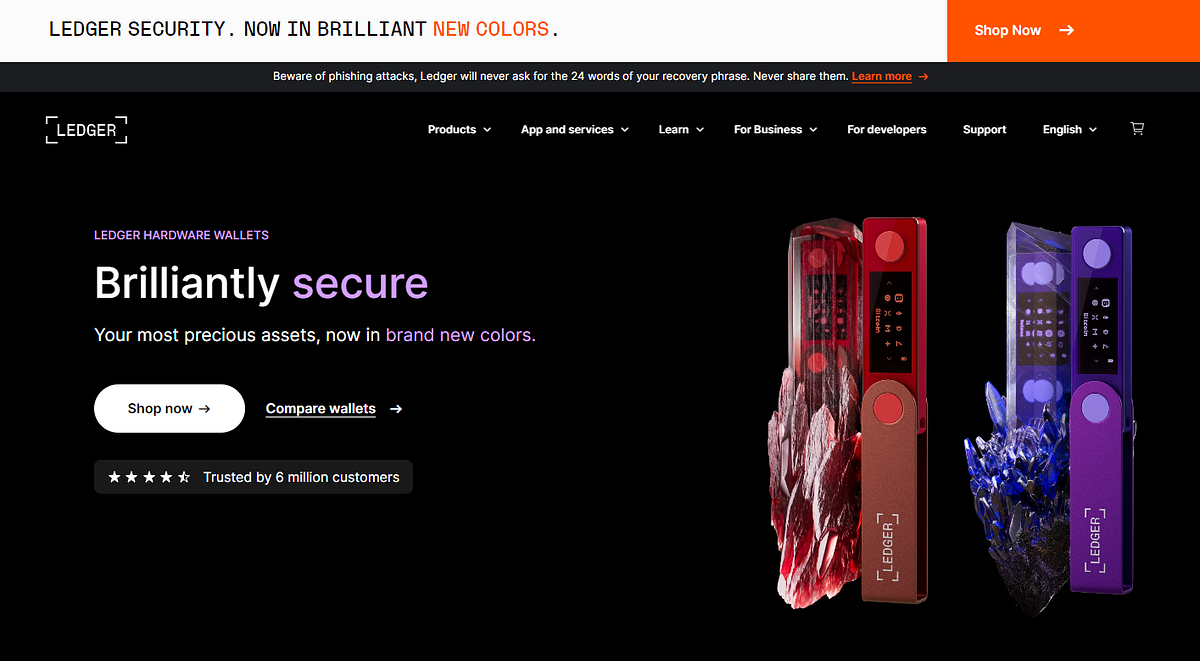
Ledger Live — Your Secure App for Managing Crypto
Ledger Live is the official companion application for Ledger hardware wallets. It provides a single, secure dashboard to manage accounts, send and receive funds, stake tokens, swap assets, and monitor portfolio performance — all while keeping your private keys safely stored on your Ledger device.
Ledger Live brings together convenience and security. Designed to work with Ledger hardware such as the Nano S Plus, Nano X, and Stax, the app displays balances across supported blockchains and provides tools for everyday crypto management. The central security principle is simple: Ledger Live prepares transactions and displays account information, while private keys and transaction signing remain on the hardware device. This separation dramatically reduces exposure to online attacks and phishing attempts.
Getting Started
To begin, download Ledger Live from the official Ledger website and install it on your desktop or mobile device. Open the app, connect your Ledger hardware using the supplied USB cable (or pair via Bluetooth where supported), and unlock it using the PIN you created during device setup. Ledger Live will then detect your device and guide you through adding accounts for the assets you wish to manage.
The setup workflow is designed to be user-friendly while maintaining best-in-class security. If you’re initializing a new device, Ledger Live walks you through PIN creation and recovery phrase verification. If you’re restoring a wallet, it provides a secure path to recover accounts using your 24-word seed phrase.
Core Features
- Portfolio Overview: View real-time balances, historical charts, and asset allocation across all your accounts.
- Send & Receive: Prepare transactions in Ledger Live and confirm them on your hardware device to ensure details are accurate before signing.
- Swap & Buy: Integrated partners allow you to buy crypto with fiat or swap tokens without exposing private keys to third parties.
- Staking: Stake supported coins directly through Ledger Live and claim rewards while keeping custody of your keys.
- Manager: Install or remove blockchain apps on your Ledger device to support various coins and tokens.
These features make Ledger Live suitable for beginners building their first portfolio and power users who need advanced controls such as custom fee settings, account labeling, and transaction history exports.
Security Model
Ledger Live’s security model relies on hardware isolation. Your private keys are generated in and remain inside the Secure Element of your Ledger device. When you request a transaction, Ledger Live constructs an unsigned transaction and sends it to the device. The device then displays the transaction details — recipient address, amount, and fees — on its screen. Only after you physically confirm these details on the device will the transaction be signed. This makes remote compromise ineffective because attackers cannot generate signatures without the physical device.
Best Practices
- Always download Ledger Live from the official Ledger website.
- Keep your device firmware and Ledger Live up to date for the latest security patches.
- Store your recovery phrase offline in a secure location; consider a metal backup for durability.
- Verify transaction details on your Ledger device screen before approving.
- Use a secure computer and avoid public Wi‑Fi when performing important transactions.
Troubleshooting
If Ledger Live does not detect your device, check the USB cable and port, try a different computer, or restart both Ledger Live and the device. For mobile users, toggle Bluetooth and re-pair your Ledger Nano X or Stax. If Ledger Live prompts for firmware updates, follow the on-screen instructions and confirm updates physically on the device. The official Ledger support site offers step-by-step troubleshooting guides if problems persist.
Remember, Ledger Live acts as a secure interface — but your security is a shared responsibility. By following best practices and verifying every critical action on your Ledger device, you keep control of your crypto and reduce exposure to online threats.